


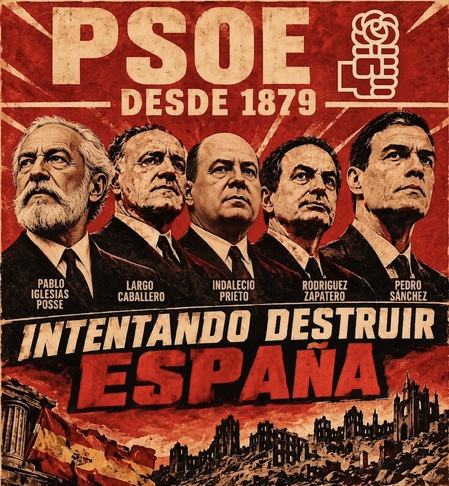
Si gana Sánchez ganan Marruecos, el independentismo catalán y vasco, el terrorismo etarra y todas las tribus de corruptos, rufianes y delincuentes.
La respuesta a la pregunta de quién gana y quién pierde con Sánchez permite dibujar un retrato inquietante de las prioridades del sanchismo, que son ajenas al bien común.
Entre los grandes beneficiados, después de Marruecos y las tribus de sinvergüenzas, figuran los partidos separatistas catalanes, cuyos dirigentes y colaboradores obtuvieron una amnistía a cambio de facilitar la investidura; EH Bildu, que superará al PNV como fuerza hegemónica vasca y se ha convertido en interlocutor parlamentario imprescindible del sanchismo; los antiguos dirigentes del "procés", que han visto desaparecer o quedar extinguidas responsabilidades judiciales por actuaciones relacionadas con el desafío independentista; las ONGs y mafias que se dedican a potenciar la inmigración ilegal y los partidos minoritarios que han conseguido arrancar concesiones a cambio de sus votos.
También han ganado los colectivos que defienden una política migratoria más abierta, especialmente tras la regularización extraordinaria aprobada en 2026 para cientos de miles de inmigrantes. A ellos se suman los sindicatos, generosamente subvencionados y sectores políticos y asociativos de izquierda, que han encontrado en el Gobierno financiación, subvenciones, interlocución y capacidad de influencia.
También han salido beneficiados los ladrones de viviendas (okupas) que han disfrutado de una repugnante impunidad, y determinados inquilinos vulnerables, protegidos por las sucesivas medidas de suspensión de desahucios.
Los grandes beneficiados políticos han sido, sobre todo, quienes han descubierto que el reducido número de sus diputados puede convertirse en una enorme capacidad de negociación. Marruecos, por su parte, obtuvo una concesión diplomática de enorme importancia cuando España modificó en 2022 su posición histórica sobre el Sáhara Occidental y respaldó el plan marroquí de autonomía como base para resolver el conflicto.
Han ganado, sobre todo, los políticos de izquierda, que han podido enriquecerse con impunidad casi plena, y todos los que se someten al capricho de Sánchez, que es la forma más fácil de hacer carrera en España.
No todos estos beneficios tienen la misma naturaleza ni todos responden a una misma política, pero dibujan una realidad: el Gobierno ha necesitado apoyos muy diversos y ha tenido que satisfacer numerosas exigencias para mantenerse en el poder.
¿Y quiénes han perdido? Han perdido los españoles que creen en la igualdad ante la ley y consideran que la justicia no debe depender de los votos que necesite un presidente. Han perdido quienes defienden la unidad nacional frente a quienes han utilizado el independentismo como instrumento de presión. Han perdido las víctimas del terrorismo que ven cómo los antiguos entornos políticos de ETA adquieren influencia institucional sin que ello implique negar la legalidad de su participación democrática. Han perdido los usuarios de los trenes y transportes públicos, los conductores que tienen que sortear baches en las carreteras, los usuarios de los servicios básicos, sobre todo de una educación devaluada y de una sanidad saturada y perdiendo calidad cada día. Han perdido los empresarios y trabajadores que cumplen y pagan impuestos, los martirizados autónomos y la gente decente en general.
También han perdido muchos propietarios que temen que las políticas de protección frente a los desahucios trasladen a ellos el coste de la vulnerabilidad social; los jóvenes que no consiguen acceder a una vivienda; los pequeños empresarios y autónomos que soportan cargas fiscales y burocráticas; las familias trabajadoras que ven cómo la recaudación pública crece sin que desaparezcan sus dificultades; y los contribuyentes que tienen que financiar un Estado cada vez más endeudado.
También pierde la ciudadanía cuando la corrupción, las sospechas sobre la contratación pública, los privilegios políticos y la utilización partidista de las instituciones deterioran la confianza en la democracia.
No todos estos problemas nacieron con Sánchez, pero todos forman parte del balance que debe exigirse a su Gobierno.
Pero Sánchez tiene sus perdedores exclusivos, encabezados por los que aman a España y los amantes de la verdad, vejados por el presidente de gobierno más mentiroso del planeta y por el que menos ama a su propia nación.
La cuestión fundamental no es solamente quién ha ganado y quién ha perdido, sino qué modelo de país se está construyendo y a quién sirve.
Un Gobierno debe gobernar para todos, no sólo para los que aclaman al líder. España necesita que la ley sea igual para todos, que la propiedad esté protegida, que la inmigración sea legal y ordenada, que los impuestos no asfixien a quienes producen riqueza, que las instituciones sean independientes y que ningún partido pueda condicionar el interés general a sus exigencias particulares.
El balance del sanchismo debe examinarse con cifras, leyes, responsabilidades y resultados, no con propaganda.
La pregunta que queda en el aire es demoledora: si quienes han conseguido más poder, más influencia y más concesiones son precisamente quienes cuestionan algunos de los fundamentos del Estado español, ¿Quién está defendiendo los intereses de los ciudadanos que sostienen ese Estado con su trabajo, sus impuestos y sus obligaciones?
Gobernar España no debería consistir en conseguir sobrevivir en La Moncloa, sino en conseguir que España y los españoles sean felices y vivan mejor.
Francisco Rubiales
English version:
Who Has Gained and Who Has Lost Under Sanchismo in Spain?
There is a question every Spaniard should ask themselves before casting their vote on the 29th: after so many years of Pedro Sánchez in power, who has gained and who has lost under his government?
The list of losers is headed by the Spanish people and Spain itself, a country Sánchez has devastated. Among the biggest winners are Morocco and the unscrupulous individuals whom Sánchez has turned into masters of the nation.
But there are many others on a list of winners and losers that is deeply disturbing and alarming.
If Sánchez wins, Morocco, Catalan and Basque separatism, ETA's political heirs, and all the tribes of corrupt individuals, scoundrels and criminals will win.
The answer to the question of who wins and who loses under Sánchez provides a disturbing picture of Sanchismo's priorities, which are disconnected from the common good.
Among the major beneficiaries, after Morocco and the various tribes of unscrupulous individuals, are the Catalan separatist parties, whose leaders and associates obtained an amnesty in exchange for supporting Sánchez's investiture; EH Bildu, which is set to overtake the PNV as the dominant political force in the Basque Country and has become an essential parliamentary partner for Sanchismo; former leaders of the Catalan independence movement, whose judicial liabilities arising from actions related to the separatist challenge have disappeared or been extinguished; NGOs and criminal networks involved in promoting illegal immigration; and minority parties that have managed to secure concessions in exchange for their votes.
Those advocating a more open immigration policy have also benefited, particularly following the extraordinary regularisation approved in 2026 for hundreds of thousands of immigrants. Trade unions, generously subsidised, as well as left-wing political and civil society organisations, have also gained access to government funding, grants, dialogue and influence.
Those who unlawfully occupy other people's homes (squatters) have also benefited from what the article describes as deplorable impunity, as have certain vulnerable tenants protected by successive measures suspending evictions.
The biggest political beneficiaries have above all been those who have discovered that a small number of parliamentary seats can translate into enormous negotiating power. Morocco, for its part, obtained a major diplomatic concession when Spain changed its longstanding position on Western Sahara in 2022 and endorsed Morocco's autonomy plan as a basis for resolving the conflict.
Above all, those who have benefited are left-wing politicians who, according to the author's assessment, have been able to enrich themselves with almost complete impunity, and everyone who submits to Sánchez's whims, which has become the easiest way to advance a political career in Spain.
Not all these benefits are of the same nature, nor do they all stem from the same policy. Nevertheless, they paint a picture of a government that has needed a wide variety of parliamentary partners and has had to meet numerous demands to remain in power.
And who has lost?
Those who believe in equality before the law and consider that justice should not depend on the votes a prime minister needs have lost. Those who defend national unity against the use of separatism as a political bargaining tool have lost. Victims of terrorism have lost, seeing former political circles associated with ETA acquire institutional influence, although this does not mean denying the legality of their participation in democratic politics.
Users of trains and public transport have lost, as have drivers forced to navigate pothole-ridden roads and users of essential public services, particularly an education system whose quality has declined and a healthcare system that is increasingly overwhelmed. Business owners and workers who fulfil their obligations and pay taxes have lost, as have hard-pressed self-employed workers and decent people in general.
Many property owners have also lost, fearing that policies designed to protect tenants from eviction transfer the cost of social vulnerability onto them. Young people unable to access housing have lost. Small businesses and self-employed workers burdened by taxes and bureaucracy have lost. Working families who see public revenues increase while their own difficulties remain have lost. And taxpayers who must finance an increasingly indebted state have lost.
Citizens also lose when corruption, suspicions surrounding public procurement, political privileges and the partisan use of institutions undermine confidence in democracy.
Not all these problems began under Sánchez, but they are all part of the record for which his government must be held accountable.
But Sánchez has his own exclusive losers, headed by those who love Spain and those who love the truth, humiliated by what the author describes as the most dishonest prime minister on the planet and one who loves his own nation the least.
The fundamental question is not merely who has gained and who has lost, but what kind of country is being built and whom it serves.
A government should govern for everyone, not just for those who applaud its leader. Spain needs equality before the law, protection of property, legal and orderly immigration, taxes that do not suffocate those who create wealth, independent institutions and a system in which no political party can subordinate the general interest to its own particular demands.
The record of Sanchismo must be examined through figures, laws, responsibilities and results, not propaganda.
The question that remains hanging in the air is devastating: if those who have gained the most power, influence and concessions are precisely those who challenge some of the foundations of the Spanish state, who is defending the interests of the citizens who sustain that state through their work, taxes and obligations?
Governing Spain should not be about managing to survive in La Moncloa, but about ensuring that Spain and its people are happy and enjoy better lives.
Francisco Rubiales


 Inicio
 Enviar
 Versión para Imprimir









Comentarios: